Use of the Forest

Public use of Saginaw Forest is encouraged. Rules for the public's use include (but are not limited to):
Showing posts with label history of Saginaw Forest. Show all posts

Monday, August 31, 2015

We fly slowly.

I've generally considered myself a very adaptable person. I would claim a genuine appreciation for change--seasons, school years, jobs. In theory, I accept the fact that change is the only certainty in life, and that you might as well make transitions gracefully.


But the truth is that I have been dreading tomorrow since the first day I moved into cabin, on August 15th of 2013.

I write to you tonight beside my last bonfire. The wood was a bit wet from our recent rains, and I burned through match after match in an attempt to kindle a lasting flame. I'd like this night to last forever, but I know it will burn out, just as I always knew I would have to leave here.


Two evenings ago I laid on the dock with Leto, welcoming the dusk. I was waiting, anticipating my favorite residents of the woods. Sure enough, it wasn't long before we heard the strange, slow staccato of the cranes calling to each other, sweeping over the canopy from the southwest. They made an elegant arc over the lake to land in their favorite corner, the shallows by the old "arboretum" to the west. They settled. Even from the dock, they are beautiful to watch. Their silver gray color stands in stark contrast to the dull browns and greens of the evening. Their lovely figures fit so well with the surrounding vegetation that, when still, they could be sculptures. One began stalking along the edge of the lake, lifting each leg slow and deliberate, pausing at the top before slipping toes back in the water. The mate followed ten feet behind. They came to a stop, five feet apart, and just stood quietly. Separate but together. Not touching. Not speaking. I was completely captivated by them, as I am every night they come.


After sometime watching, I began to feel uncomfortable. Like I was trying to steal a piece of something that didn't belong to me. The only thing that could make this evening ritual they share better, more precious, would be if they were truly alone. That they could share that quiet without prying, curious eyes. The feeling was persistent, so I left them quickly.

The idea of leaving the forest, of leaving this house I've come to call my "own," has been agony to come to terms with. But when I think of how much better it felt to leave the cranes their privacy, I feel slightly better. Perhaps the only thing that could improve this place would be my absence. Letting it exist free of my porch lights, my fires, my whoots and hollers as I ski the paths on dead winter nights.


So I accept that tonight is my last here. And in whatever way it is possible to thank this piece of land, I do. I thank it for helping me to grow up, for helping me understand what I need to be happy and what I don't. For making me aware of subtle changes, and simple beauty. I thank Saginaw for forcing me to learn how to sharpen tools, fix a lawn mower, and use a chainsaw. I'm grateful for all of the people I brought together here for dinners, walks, and workdays. For the lovely hikers I met walking the trails. And I am indebted to this place for the hundreds of moments I shared with my best friend Leto: cold January mornings wrapped in blankets on our futon, boat rides, hikes, and evenings on the dock with my head propped on his furry rump.


Though tomorrow ends my residency here, I will still be visiting these woods, contributing to their history with my footsteps. As a parting gift, I've planted a number of wildflowers here in the hopes that they will someday take back some land as invasive plants are removed in the years to come (the cardinal flower is doing particularly well!).


To those who have kept up with my intermittent blogging, thanks for joining the ride. And for those of you I've shared the trails with, look after them for me.

Cheers,

Jenny & Leto

Saturday, August 18, 2012

On this date in 1941: The second application of rotenone on Third Sister Lake

Time was that the humane treatment of animals didn't really extend to fish. As part of a bit of background reading to assess the possibility of conducting an updated fish survey of Third Sister Lake, I found only one article on the topic of fish in this lake, and it was published in 1942.

The very first sentence of the introduction reads:
The complete removal of fish from Third Sister Lake was not carried out for the primary purpose of making a fish population analysis but rather as part of a general investigation on the existing relationship between the fish and fish-food organisms in this lake.
The author continues by clinically describing the process:
The destruction of the fish population was accomplished by means of rotenone (Derris root) which was supplemented by netting-and angling during the 3 weeks previous to poisoning. The actual poisoning process and its effect on the fish and other organisms found in the lakes described by the authors elsewhere in this volume.

The first poisoning operation was carried out on May 6, 1941, before the spawning season and before the aquatic vegetation was extensive enough to hamper the recovery of fish ... Because the first poisoning did not kill all the fish, a second application was made on August 18 and 19 when water temperatures were more favorable. Only a very few adult fish were recovered along with many thousand bluegill and pumpkinseed fry. These were not included in the population total. After that time, however no fish were seen in the lake until June, 1942,when a few long-eared sunfish entered the lake, presumably via the outlet during high water. We believe that the poisoning was 100 per cent effective in the removal of fish in August.
In other words, they poisoned the lake and then collected the fish that floated up to the surface. The first time wasn't good enough to clear the lake, and so they did another application, but didn't include those fish in the survey. Oh, and by the way, no fish were seen until the summer of the following year; likely up-migration from the connecting stream.

We are relatively concerned about the presence of 1,4 dioxane in the groundwater, and the spills and their infiltration into the groundwater is cause for concern throughout the area affected, but it is worth noting that the wonderfully lovely looking Third Sister Lake was - at one point - the site for the deliberate complete and utter destruction of all fish (and all invertebrates, as well) in the lake. Of course, unlike 1,4 dioxane which is a very persistent molecule, rotenone loses almost all of its toxicity within one week.

Still, considering that the methodology is one that we wouldn't think of using today when conducting fish surveys, the 1941 survey did a few things, such as provide a good estimate of total fish biomass in Third Sister Lake as well as providing a date certain from when there were absolutely no fish in the lake.

BTW, rotenone continues to be used for fish collection and as a measure of last resort for fish management. Happily, though, rotenone won't be use in Third Sister Lake at any time soon.

Friday, June 22, 2012

Brief description of Third Sister Lake

Although there have been many studies in Third Sister Lake, although I provided an initial description of Third Sister Lake, and although there have been descriptions of the history of the forest, little on this site has included much discussion of the history of the lake and of the inputs to the lake.

The following is taken from Hammer & Stoermer (1997), and any use of the following description in any publication must provide proper citation of their paper:
Third Sister Lake (42°17' N., 83°48' W.) is located approximately three miles west of Ann Arbor in the Saginaw Forest of Scio Township, Michigan (Figure 1). This small kettle lake likely formed during the retreat of the Wisconsin glacier, which created a terminal moraine in southern Michigan (Reed, 1902). Mature conifer plantations and hardwood stands of Saginaw Forest shelter Third Sister Lake. Although the lake stratifies in the summer, spring mixing does not occur every year (Lehman & Naumoski, 1986). The present maximum depth is 17.0 m, and the surface area about 3.8 ha. A small intermittent stream enters the lake on the south shore and a single outflow on the southwest shore drains through a small marsh (Figure 1) to the Huron River.

Although Saginaw Forest surrounds Third Sister Lake on a 32 ha tract, significant construction has occurred in the watershed since the 1960s. Agricultural activities originally occupied the entire area east of Saginaw Forest. Currently, this adjacent property is subdivided into several small plots (Wojcik, 1993, personal communication) where industrial and commercial construction has occurred from 1963 to the present (Figure 1). Contamination of Third Sister Lake and local groundwater with 1,4-dioxane was revealed in the 1980s following leakage from an unlined, oxidation lagoon on Gelman Sciences, Inc. property bordering the lake (Brode&Minning, 1988). The most recent project in the adjacent lot, initiated in 1987, included retention pond construction with an outflow that transports stormwater from this nearby property into the inflow stream bed in Saginaw Forest. Ultimately this stormwater reaches Third Sister Lake 300 m downstream. Although erosion barriers were erected in the stream bed on university property, these barriers have since been undercut and subverted by stream flow, creating a gully with steep banks of unconsolidated soil. (Hammer & Stoermer, 1997, pp. 438-439)

Bibliography:
  • Hammer, Brian K.; Stoermer, Eugene F.; (1997). "Diatom-based interpretation of sediment banding in an urbanized lake." Journal of Paleolimnology 17 (4): 437-449. http://hdl.handle.net/2027.42/43079

Thursday, June 21, 2012

A 1961 description of the plantings

Doing a search for "Saginaw Forest" on the University of Michigan Library's DeepBlue server came up with several university documents about the property, including this one from 1961 that discusses the history and the plantings in the property:

A Guide to Saginaw Forest (1961)

A pdf is available for public download at that site. The document also contains a map of the three near-Ann Arbor properties managed by SNRE (Saginaw Forest, Newcomb Tract, and Stinchfield Woods) as well as an original plantings map of Saginaw Forest.

Tuesday, May 22, 2012

Short history of the founding of Saginaw Forest

Today, Prof. Emeritus Chuck Olson gave me a short history of Saginaw Forest's founding. He has been kind enough to allow me to publish the whole thing here.
Text of a Short Presentation to the Rotary Club of Ann Arbor
on October 29, 1997 by Charles E. Olson, Jr.

This story, like many concerning the University of Michigan, has many beginnings. None, by itself, could yield the whole story. Rather, it is the coming together of several trails which results in something of note.

We pick up one trail when an immigrant German physician, who first settled near Chillicothe, Ohio, saw the light and moved to Ann Arbor in 1860. Although a practicing physician, his real love was geology, and he served as Michigan's State Geologist from 1870 to 1885. Our physician was also a land owner, with properties in at least three townships in Washtenaw County. One of these properties, the W1/2 of the SE1/4 of Sec. 26, T2S, R5E, totaling 80 acres more or less, was purchased on a land contract in 1878, and continued to be farmed by tenant farmers.

The focus of the second trail is a native of Michigan who earned his Civil Engineering degree from the University of Michigan in 1865, headed west and spent a year as a railroad surveyor in Minnesota, after which he returned to his father's lumber business as a "land looker." He prospered in this business and became one of the "lumber barons" who figured prominently in the development of Saginaw, serving as its Mayor for three terms. In 1889, he was one of two appointees to the State Board of Forestry Commissioners.

The third trail relates to another German immigrant who arrived in the United States in 1871, at the age of 13, spent several years in Wisconsin, and then lived the life of a pioneer from Montana to Texas from 1874 to 1882, before returning to Wisconsin to teach school. In 1885 he came to Ann Arbor where he enrolled in the University of Michigan as a freshman, and received his Bachelor of Science degree (in general science) in 1890. He wrote extensively on the forests of Wisconsin and joined the Forestry Division of the General Land Office in 1892, becoming its Chief in 1901.

[At this point, it may be worthwhile to point out that the famous Peshtigo Fire that killed more than 1,500 persons in Wisconsin, the Michigan Fires that burned over 2,500,000 acres, all occurred on the same three days as the "great Chicago Fire" in October 1871. Michigan also experienced catastrophic fire in the Thumb Area in 1881, and the relief effort included the first such activity by the newly formed American Red Cross. Following these catastrophic forest fires, the first University-level course on Forestry was taught at the University of Michigan, in the Department of Political Science.]

How do our three trails converge?

In 1901, our timber baron and Mayor from Saginaw - one Arthur Hill - was appointed to the Board of Regents of the University of Michigan. To strengthen the University's fledgling forestry program, the Board of Regents induced Filibert Roth to leave the Forestry Division of the GLO and come to Michigan in 1903. To provide a place at which forestry could be practiced and demonstrated, Regent Hill approached our physician/geologist, Carl Ludwig Rominger - more commonly known as Charles Rominger - and arranged to purchase a parcel of land - the W1/2 of the SE1/4 of Sec. 26, T2S, R5E, totaling 80 acres more or less - from him. The purchase was completed on December 23, 1903, with the proviso that the tenant farmer could harvest his winter crops the following spring.

Regent Hill offered the parcel to the University and the gift was accepted on January 14, 1904. The deed specified that the property was
"...To be used by the Forestry Department to determine which species of Trees could be used to reforest the worn out farm lands of Michigan."
The deed further specified that the property should be known as The Saginaw Forestry Farm, a title that was subsequently shortened to simply, Saginaw Forest.

The first plantings were made by Forestry students, beginning with a stand of white pine near the northeast corner of the property, planted in the spring of 1904. To reach the property, students took the street car out Jackson Avenue to what is now Stadium Boulevard and then walked the remaining mile-and-a-half to the property, carrying their tools. As evening approached, the students walked back to the end of the line and took the street car back to campus.

Altogether, some 40 species of trees were planted, of which 28 are not native to this part of Michigan, and ten are not native to the United Stated. Professor Roth took such a keen interest in these plantings that he was sometimes observed tending and watering the trees by hand.

The last plantings at Saginaw Forest were completed in 1937, but in the 1960s a natural hybrid birch was discovered near the shore of Third Sister Lake. The hybrid has now been propagated elsewhere and has been named the Murray Birch, after Frank Murray, another "land looker" who was brought to the University in 1935 and served as Properties manager for the School of Forestry & Conservation, the School of Natural Resources, and the School of Natural Resources & Environment. Frank was also a Registered Surveyor and my surveying instructor during my sophomore year at Michigan.

A small stone building was erected near the lake in 1915, as a place to store tools. A well was added to provide water, and the cabin [was] subsequently wired for electricity. This led to other improvements which made it possible for a caretaker, usually a married student, to live on the property. To my knowledge, this is the only University-owned residence which has a "path" rather than an indoor toilet.

The property is presently used as a teaching laboratory in Forest Ecology, Forest Soils and Hydrology, and other courses. There is no other site within 50 miles of Ann Arbor, on either public or private land, which offers a similar diversity of aquatic, wetland and upland ecosystems. This 80-acre tract provides examples of several glacial features, including a portion of the Ft. Wayne end-moraine, a small kame, a kettle lake, and an extensive area of glacial till which once supported a beech-sugar maple forest. No other remnants of the beech-maple forest once found on thousands of acres of this large moraine remain in public ownership except at 20-acre tract owned by the Plymouth, Michigan school system. Thus, Saginaw Forest is one of the last semi-natural tracts remaining on this extensive land form. Successional processes are underway which will, without human action, result in a forest resembling the forests which stood here 300 years ago. This property is on the way to becoming a small urban wilderness of tomorrow.

Thursday, March 22, 2012

Spring frog survey done

Frog man, Prof. K. Berven, finished up the spring frog survey last night. This is - not unexpectedly, considering how much warmer this year has been - not surprising, though. However, compared to previous years, the spring 2012 survey seems (at least to me) to have started earlier (I first saw him on March 11, 2012) and lasted for a shorter time than in previous years (which have mentions of his surveys starting between March 13 and March 30 and lasting a few weeks).

Already the sounds of frogs at night has diminished from a deafening cacophony to merely a loud chorus. It seems that this is another price to pay for an inclemently warm March.

Thursday, March 15, 2012

Saginaw Forest research

I'm updating the list from August 19, 2010, since I came across another reference, this one to a soil survey conducted in 1964. It's interesting how Google searches are picking up more and more references to studies that have taken place out here. In this case, I think that the Google search turned up the book due to the collaboration that the University of Michigan has with Google - part of the Google Books scanning initiative that's been going on for several years now.

(Remember, too, that there have been several studies on Third Sister Lake.)

SAGINAW FOREST REFERENCES
In chronological order
note: this list is not necessarily exhaustive
compiled by S. Lacy (March 2012)
  • Arnold, JD (1935) “A comparative study of certain species of Marasmius and Collybia in culture” Mycologia 27(4): 388-417
  • Smith, AH (1935) “Studies in the genus Mycenia. I.” American Journal of Botany 22(10): 858-877
  • Blair, WF (1937) “The Burrows and food of the prairie pocket mouse” Journal of Mammalogy, 18(2): 188-191
  • Yeager, LE (1937) “Cone-piling by Michigan red squirrels” Journal of Mammalogy, 18(2), 191-194
  • Hann, HW (1939) “The relation of castration to migration in birds” Bird-Banding 10(3): 122-124
  • Misch, MS (1960) “Heat Regulation in the Northern Blue Jay, Cyanocitta Cristata Bromia Oberholser” Physiological Zoology 33(4): 252-259
  • Ladrach, WE (1964) A Soil Survey of Saginaw Forest, M.For. thesis, University of Michigan, 116pp.
  • Kistler, S, AG Stephenson and WS Benninghoff (1979) “Description of understory development in a tree plantation with a new method of data structuring” Vegetatio 40(3): 185-191
  • Barnes, BV and BC Dancik (1985) "Characteristics and origin of a new birch species, Betula murrayana, from southeastern Michigan" Canadian Journal of Botany 63(2): 223-226
  • Howard, RD and AG Kluge (1985) “Proximate mechanisms of sexual selection in wood frogs” Evolution 39(2): 260-277
  • Olson, CE, Jr and Z Zhu (1985) “Forest species identification with high spectral resolution data” JPL Proceedings of the Airborne Imaging Spectrometer Data Analysis Workshop. Pages 152-157 (SEE N86-11618 02-43); United States
  • Cornell, TJ, KA Berven, and GJ Gamboa (1989) “Kin recognition by tadpoles and froglets of the wood frog Rana sylvatica” Oecologia 78: 312-316
  • Riha, VF and KA Berven (1991) “An analysis of latitudinal variation in the larval development of the wood frog (Rana sylvatica)” Copeia 1991(1): 209-221
  • Berven, KA and RS Boltz (2001) “Interactive effects of leech (Desserobdella picta) infection on wood frog (Rana sylvatica) tadpole fitness traits” Copeia 2001(4): 907-91
  • Kahan, A (2008) Nitrogen and Carbon Biogeochemistry in Soil and Vegetation Along an Indirect Urban-Rural Gradient in Southeastern Michigan. M.S. thesis, University of Michigan.
  • Berven, KA (2009) “Density dependence in the terrestrial stage of wood frogs: Evidence from a 21-year population study” Copeia 2009(2): 328-338

Thursday, December 9, 2010

Entries from Kurt Byers

I received an e-mail from Kurt Byers, the Saginaw Forest caretaker during the summers of 1984 and 1985, together with some photos that he took. This was a really heart-warming thing to see, especially after waking up to 7F (-14C) temperatures this morning. Parts of the e-mail are posted below. As well, I have updated the entries that Kurt had written in his journal from his tenure.
Ah, memories. I noticed the blurb about your UM SNRE Saginaw Forest caretaker blog http://saginawforest.blogspot.com/ in the Fall 2010 issue of "Stewards." I was the caretaker at Saginaw Forest the summers of 1984 (between my junior and senior years at SNR) and 1985, after I graduated that spring as a 33-year-old "returning adult student" with a BS in Natural Resources and concentration in the now-defunct Environmental Communication program.


I was the sole student in that program when SNR shut it down in 1985 and released my academic advisor, Rich Block, due to a budget crisis (and perhaps low enrollment in the concentration and a concurrent general move by SNR to phase out its undergraduate programs). But I'm happy to say that academic program launched me on what is now a satisfying 25-year career in environmental communication with the NOAA Sea Grant College Program, starting with Michigan Sea Grant at UM my final semester at SNR, and for the past 22 years with Alaska Sea Grant at the University of Alaska Fairbanks. Sea Grant bio: http://seagrant.uaf.edu/staff/byers.html


My two summers as caretaker at Saginaw Forest were peaceful and uneventful. There was no caretaker journal then, as far as I know. I did, however, keep a personal journal. Spurred by the blurb in Stewards, I dug up my journal from that time to see what, if anything, I wrote about my stints at Saginaw Forest. (Not much)


I do recall splitting a huge pile of firewood, mowing the lawn, doing check-walks around the lake, wondering about toxins in the lake from the Gelman micro filter company, and sleeping on a mattress on the floor in the loft. And, somehow, in 1985, I lost my bowling ball out of a small U-Haul trailer I rented when I moved my stuff from my married housing apartment (although I was not married then) by the Medical Center (roach-infested apartments now torn down) to Saginaw Forest.


The most memorable event was when I lost my 12-foot aluminum john boat, when it somehow got loose and floated away in 1985. Then working part-time for Michigan Sea Grant as an editorial assistant, I had recently edited the Master's thesis of Sea Grant-funded UM grad student, Karl Huggins. His thesis described his invention of the Orca EDGE (Electronic Dive Guide) dive computer, which gained him everlasting fame in the scuba diving world.


Assuming my boat had sunk in the deep, cold lake, I easily persuaded Karl to do a search-and-recovery dive to try to find it. Karl and his dive buddy (photos attached) treated it like a training dive, spending a weekend afternoon scuba diving in the lake looking for my boat. No luck. Later, when the lake froze over and the cattails died, I found my boat frozen in the ice deep in the cattails, a place inaccessible to search without a boat in the summer. I tried to hack it out of the ice with an axe. I don't remember if I succeeded or if I had to wait to recover the boat later in the year when the ice thawed.


In any case, I was amazed to read the log entry from January 3, 1986, by caretaker R. Boyle, wherein he noted his discovery of what he speculated to be my boat! I don't recall anyone notifying me of his find and I don't recall knowing R. Boyle. Maybe both of us found it at different times that winter. Epilogue: A quarter century later, the boat is still around, now possessed by my brother-in-law in Grand Rapids!


My then girlfriend and later-to-be-wife, the late Poksyn Yoon (deceased 2008), was a post doc biochemist at UM and lived down Liberty Road about a mile or two from the Saginaw Forest gate. During the summer of 1985 I worked two jobs-two days a week for Michigan Sea Grant on North Campus, and three days a week for a residential accessory (room additions, carports, etc.--that's the company's Ford pickup in the attached photos) company in Livonia. On her way to campus, Poksyn would often leave a lunch for me in a small Igloo cooler on the gate to the Saginaw Forest driveway, and I'd grab it when I left for work in the morning. One morning someone absconded with it, and that was the end of that little ritual.
Karl Huggins: setting up for scuba search


Dr. Poksyn Yoon


"Wookie"

Kurt in front of the cabin.


Turtles!


It's amazing to me how much everything is still the same, and amazing how much has changed. For example, the rusted hitch-and-wheels is still on the property, rusting away. The cedar next to the cabin has grown significantly taller and shades the cabin a lot more than in 1985, and I don't recall ever seeing so many turtles in the lake. Too, the woodpiles are quite impressive. I have to admit that, with a gas furnace (perhaps installed since 1985?), I don't chop too much wood (and don't use most of the wood that I chop, either).

I would very much like to thank Kurt for sharing his memories of his time in the cabin in the woods, and encourage any other readers to feel free to send me their own recollections or photographs of times past in Saginaw Forest.

Monday, August 30, 2010

History of Saginaw Forest -- as reported in 1953, 1958 and 1977

Looking at the historical account of Saginaw Forest — written in various encyclopedic surveys of the University of Michigan — one finds a very nice historical account from 1953 of the setup and initial planting of the property:
Shortly after the establishment of the Forestry Department in 1903, Arthur Hill, of Saginaw, former lumberman and Regent of the University, presented a tract of eighty acres to the University for the use of the department. The area is about four miles from the campus on West Liberty Road, and under the terms of the deed was designated as the Saginaw Forestry Farm. At that time part of it had so deteriorated that cultivation had been abandoned, and the remainder was still under lease for crop production. In 1904 several coniferous plantations were established on the idle part of the tract. Additional planting was done each year until by 1915 the entire plantable area had been covered. By 1928 fifty-five acres were in forest plantations, consisting of nine coniferous species and twelve hardwoods. The balance of the area comprises a lake of eleven acres, swampy ground, an arboretum, natural second growth on slopes that were never cultivated, and roads. Thirteen additional species were planted in the Arboretum. A detailed history of the various plantations by Professor Leigh J. Young has been published in Volume IX of the Papers of the Michigan Academy of Science, Arts, and Letters under the title, "Growth and Cultural Experiments on the Saginaw Forest."
The 1958 encyclopedic survey noted a few additional pieces of historical information (in addition to the information presented above:
The Saginaw Forest — When the Forestry Department was established, one of the immediate needs was for land on which instruction and research in forestry operations could be carried out. The need was met by Arthur Hill, of Saginaw, a lumberman and Regent, who purchased an eighty-acre tract, two miles west of Ann Arbor, in 1903 and deeded it to the University, with the stipulation that it be used as a forestry demonstration and experimental area. The deed also specified that the official name should be "The Saginaw Forestry Farm." By 1919 the development of the plantations had reached such a stage that the name "farm" seemed inappropriate, so it was changed by the Regents, at the request of the Department of Forestry faculty, to "The Saginaw Forest."

Planting of the cleared parts began in the spring of 1904 and was completed in 1915. Later, some of the species proved to be unsuited to the sites on which they had been planted. Other species suffered serious damage from insects and diseases. Most of these unsuccessful plantations have been clear cut, and the areas have been replanted with different species. A few have been kept because of their demonstration value.
The total area of experimental plantations is fifty-five acres, with the balance of the area occupied by the lake, swamp, natural second-growth, roads, buildings, and a small arboretum. Most of the plantings are now so far advanced that the history of their development furnishes much information that can serve as a guide for future operations in reforestation in southern Michigan. Even the failures have been valuable in this respect.

During the summer and fall of 1915, a stone cabin was built for tools and materials and as a shelter for classes and work-crews in inclement weather. It was unfortunate that the need for a caretaker's residence could not have been foreseen, so that a design better suited to the present use of the building could have been adopted. In 1947 the building east of the cabin was erected as a garage and to furnish supplementary living and storage space.

In the hearts of many of the older alumni there is much sentiment for the old "Forestry Farm." It was there that they struggled with grub hoes and spades to establish the first plantations, while arguing vigorously as to the feasibility of starting forests in such an artificial way. There they enjoyed the fellowship of the annual "Camp Fire" in the fall and of the weekend-long "Field Day" in the spring. On the hillside back of the present cabin, they sat and listened to the inspirational talks of "Daddy" Roth. A short distance from the cabin, a large stone with an appropriate bronze tablet was erected by the students in 1927 as a memorial to Professor Filibert Roth, the first head of the Department of Forestry.

Most of the tract of eighty acres consists of level to gentle slopes, with a few short, steep slopes. Toward the north end is Third Sister Lake, covering eleven acres, with about six acres of swamp around the west and south sides. A deep ravine runs southeasterly from the lake to the mid-point of the east boundary. The bulk of the soil is Miami loam.
Stanley G. Fontanna
Twenty years later, additional historic information about Saginaw forest was provided in the 1977 encyclopedic survey:
There has been some evolution in the outlying forest properties. Soon after World War II, as Ann Arbor grew around the Eberwhite Woods area on the west boundary of the city, negotiations were made in the hopes of trading the 43-acre property to the city in exchange for a tract of equal value further out in the country. In 1946, however, the Regents voted to give the land to the city with no replacement. While part of the tract has been used for a grammar school, 30 acres are still undeveloped and are still used for field classes. A similar fate probably faces the Saginaw Forest property further west on Liberty Road. This 80-acre tract, which was given to the School in 1903 by Arthur Hill of Saginaw, has some beautiful plantations, some nearly 70 years old, and small Third Sister Lake is nicely sited in the center of the tract. It has become a favorite hiking spot for Ann Arbor residents; and, although the School continues to manage it for class purposes, the decision has been made that its principal future assignment will be recreational research and use.

Thursday, August 19, 2010

Saginaw Forest research

Along with a lot of research that has taken place on Third Sister Lake, there has been a good deal of research done elsewhere on the property of Saginaw Forest. Below is a non-exhaustive list of research that has been conducted in Saginaw Forest or was based on collections taken from Saginaw Forest. This is supposed to be complementary to the list of research papers for Third Sister Lake.

One note: a lot of research that is referenced when doing a Google Scholar search of "Saginaw Forest" was published in the Papers of the Michigan Academy of Science, Arts and Letters, which is not available online (at least not yet). As such, I cannot get a full citation of the many papers published there.

SAGINAW FOREST REFERENCES
In chronological order
note: this list is not necessarily exhaustive
originally compiled by S. Lacy (August 2010)
  • Arnold, JD (1935) “A comparative study of certain species of Marasmius and Collybia in culture” Mycologia 27(4): 388-417
  • Smith, AH (1935) “Studies in the genus Mycenia. I.” American Journal of Botany 22(10): 858-877
  • Blair, WF (1937) “The Burrows and food of the prairie pocket mouse” Journal of Mammalogy, 18(2): 188-191
  • Yeager, LE (1937) “Cone-piling by Michigan red squirrels” Journal of Mammalogy, 18(2), 191-194
  • Hann, HW (1939) “The relation of castration to migration in birds” Bird-Banding 10(3): 122-124
  • Misch, MS (1960) “Heat Regulation in the Northern Blue Jay, Cyanocitta Cristata Bromia Oberholser” Physiological Zoology 33(4): 252-259
  • Kistler, S, AG Stephenson and WS Benninghoff (1979) “Description of understory development in a tree plantation with a new method of data structuring” Vegetatio 40(3): 185-191
  • Barnes, BV and BC Dancik (1985) "Characteristics and origin of a new birch species, Betula murrayana, from southeastern Michigan" Canadian Journal of Botany 63(2): 223-226
  • Howard, RD and AG Kluge (1985) “Proximate mechanisms of sexual selection in wood frogs” Evolution 39(2): 260-277
  • Olson, CE, Jr and Z Zhu (1985) “Forest species identification with high spectral resolution data” JPL Proceedings of the Airborne Imaging Spectrometer Data Analysis Workshop. Pages 152-157 (SEE N86-11618 02-43); United States
  • Cornell, TJ, KA Berven, and GJ Gamboa (1989) “Kin recognition by tadpoles and froglets of the wood frog Rana sylvatica” Oecologia 78: 312-316
  • Riha, VF and KA Berven (1991) “An analysis of latitudinal variation in the larval development of the wood frog (Rana sylvatica)” Copeia 1991(1): 209-221
  • Berven, KA and RS Boltz (2001) “Interactive effects of leech (Desserobdella picta) infection on wood frog (Rana sylvatica) tadpole fitness traits” Copeia 2001(4): 907-91
  • Kahan, A (2008) Nitrogen and Carbon Biogeochemistry in Soil and Vegetation Along an Indirect Urban-Rural Gradient in Southeastern Michigan. M.S. thesis, University of Michigan.
  • Berven, KA (2009) “Density dependence in the terrestrial stage of wood frogs: Evidence from a 21-year population study” Copeia 2009(2): 328-338

There used to be more birding research activity in Saginaw Forest

In doing a brief survey of Saginaw Forest-related research (the published pieces that don't deal specifically with Third Sister Lake, that is), indicate that there used to be more birding research in Saginaw Forest. One key piece of direct evidence comes from Hann's 1939 article:
Early in the year 1933, the writer began some experiments in the relation of castration to the migration of birds in connection with a banding station at Saginaw Forest five miles west of Ann Arbor. The results, though not as decisive as hoped for, are reported at this time, because the banding station has been discontinued, and there is little likelihood that any remaining birds will be recovered.
 Although the birding station in Saginaw Forest was discontinued, bird collection was not, as evidenced by Misch's 1960 article:
The birds used in this study were captured in Ann Arbor and at Saginaw Forest, 4 miles west of Ann Arbor, Washtenaw County, Michigan
Somewhat interesting is the description of the distance from Ann Arbor to Saginaw Forest. Almost every time the forest is mentioned, it is associated with a distance "west of Ann Arbor." (When no distance is given, the article in question will usually have a reference to its location within Washtenaw County, in Southeast Michigan.) The reported distance from Ann Arbor isn't consistent, however, and it ranges from a minimum of 3 miles to a maximum of 5 miles. Using the technology now available to us, it is possible to see that the distance from the entrance to Saginaw Forest to Liberty and Main (i.e., "downtown") is 3.1 miles; State and North University (i.e., the edge of Central Campus) is 3.6 miles; to the Biology Department is 3.7 miles; to the School of Natural Resources and Environment is 3.8 miles; and to the Natural History Museum is 3.9 miles. Therefore, 3-4 miles is a decent estimate of distance, depending on whether one means the University or the town center. However, for the single reference I found to a 5-mile distance... I can't explain it.

Academic research conducted on Third Sister Lake

Over the years, there has been a good amount of research on Third Sister Lake (not to mention the rest of the Saginaw Forest property). I recently came across a long list of academic papers written about our little lake, and since it was 13 years out of date, I decided to update it with a cursory check of new papers with "Third Sister Lake" published in the last 14 years (have to include 1997, donchaknow?) and found that there weren't too many that were published since the list was last updated by T. Bridgeman, but enough to warrant me reproducing the list here.

Note: these articles cite the use of specimens taken from Third Sister Lake as well as studies conducted on Third Sister Lake.

THIRD SISTER LAKE REFERENCES
In chronological order
note: this list is not necessarily exhaustive
originally compiled by K.L. Schulz and P.M. Yurista;
Updated by T. Bridgeman, March 1997
Updated by S. Lacy, August 2010

The majority of this list was found here.
  • Weld, L.H. 1904. "Botanical survey of Huron River Valley II. A peat bog and a morainal lake." Bot. Gaz. 37: 36-52.
  • Hatch, M.H. 1925. "Habitats of coleoptera." Journal of the New York Entomological Society 33(4): 217-223.
  • Crabb, E.D. "Growth of the pond snail, Lymnaea stagnalis appressa, as indicated by increase in shell-size." The Biological Bulletin 54(1):41-63.
  • Woodhead, A.E. 1929. "Life history studies of the trematode family Bucephalidae." Transactions of the American Microscopial Society 48(3): 256-275.
  • Eggleton, F.E. 1931. "A limnological study of the profundal bottom fauna of certain fresh water lakes." Ecological Monographs 1(3): 231-331.
  • Eggleton, F.E. 1931. "Limnetic distribution and migration of corethra larva in two Michigan lakes." Papers of the Michigan Academy of Science, Arts, and Letters 15: 361-388.
  • Krull, W.H. 1931. "Life history studies on two frog lung flukes, Pneumonoeces medioplexus and Pneumobites parviplexus." Transactions of the American Microscopial Society 50(3): 215-277.
  • Old, M.C. 1931. "Taxonomy and distribution of the fresh-water sponges (Spongillidae) of Michigan." Papers of the Mich. Acad. Sci, Arts, and Letters. 15: 439-476.
  • Price, H.F. 1931. "Life history of Schistosomatium douthitti (Cort)." American Journal of Epidemiology 13(3): 685-727
  • Old, M.C. 1932. "Observations on the Sisyridae (Neuroptera)." Papers of the Mich. Acad. Sci., Arts, and Letters. 17: 681-711.
  • Bosma, N.J. 1934. "The life history of the trematode Alaria mustelae, Bosma, 1931." Transactions of the American Microscopial Society 53(2): 116-153.
  • Leonard, J.W. 1934 "The naiad of Celitheimis monomelaena Williamson (Odonata: Libellulidae)." Occasional Papers of the Museum of Zoology 297: 1-8.
  • Laing, H.E. 1939. A physiological study of some aquatic plants. Ph.D. Thesis. University of Michigan.
  • Brown, C.J.D. and R.C. Ball. 1942. A fish population study of Third Sister Lake. Trans. Amer. Fish. Soc. 72:177-186.
  • Brown, C.J.D. and R.C. Ball. 1943. An experiment in the use of Derris Root (Rote-None) on the fish and fish-food organisms of Third Sister Lake. Trans. Amer. Fish. Soc. 72:267-284.
  • Ball, R.C. 1943. Relationship of the invertebrate fauna to the fish population in Third Sister Lake, Wastenaw County, Michigan. Ph.D. Thesis. University of Michigan. 127 p.
  • Goodrich, C. "The Walker-Beecher paper of 1976 on the Mollusca of the Ann Arbor area." Occasional Papers of the Museum of Zoology 475:1-28.
  • Ball, R.C. 1947. A tagging experiment on the fish population of Third Sister Lake, Michigan. Trans. Amer. Fish. Soc. 74:360-369.
  • Hatchett, Stephen P. 1947. Biology of the Isopoda of Michigan. Ecol. Mon. 17: 47-79.
  • Ball, R.C. 1948. Relationship between available fish food, feeding habits of fish and total fish production in a Michigan Lake. Mich. State Ag. Exp. Sta. Tech. Bulletin 206. 59 p.
  • Berg, C.O. 1949. Limnological relations of insects to plants of the genus Potamogeton. Trans. Amer. Micros. Soc. 78: 279-291.
  • Berg, C.O. 1950. Biology of certain chironomidae reared from Potamogeton. Ecol. Monogr. 20: 83-101.
  • Berg, C.O. 1950. Hydrellia (Ephydridae) and some other Acalyptrate diptera reared from Potamogeton. Annals of the Entomological Society of America 43: 374-398.
  • McGaha, Y.J. 1951. The limnological relations of insects to certain aquatic flowering plants. Ph.D. Thesis. University of Michigan.
  • Ball, R.C. and Hayne. 1952. Effects of the removal of the fish population on the fish-food organisms of a lake. Ecology 33: 41-48.
  • McGaha, Y.J. 1952. The limnological relations of insects to certain aquatic flowering plants. Trans. Amer. Micros. Soc. 71: 355-381.
  • Hopper, F.F. and A.M. Elliott. 1953. Release of inorganic phosphorus from extracts of lake m by Protozoa. Trans. Amer. Micros. Soc. 72: 276-281.
  • Bender, M.E. and R.A. Jordan. 1970. Plastic enclosure versus open lake productivity measurements. Trans. Amer. Fish. Soc. 99: 607-610.
  • Jordan, R.A. 1970. Factorial enrichment experiments in a southeastern Michigan lake. Ph.D. Thesis. University of Michigan. 235 p.
  • Dunnette, David A., 1973. Chemical ecology of H2S production in freshwater lake sediment Ph.D. Thesis. University of Michigan.
  • Jordan, R.A. and M.E. Bender 1973. An in situ evaluation of nutrient effects in lakes. EPA Ecol. Res. Ser. EPA-R3-73-018. 227 p.
  • Robertson, C.K. 1978. Natural rates of methane production and their significance to carbon cycling in two small lakes. Ph.D. Thesis. University of Michigan. 180 p.
  • Robertson, C.K. and D.P. Chynoweth. 1978. Methanogenesis: a measure of chemoorganitrophic (heterotrophic) activity in anaerobic lake sediments. in R.R. Colwell and W. Costerton (eds.), Native aquatic bacteria, enumeration, activity and ecology. Procedings of the American Society for Testing and Materials Symposium, Minneapolis, June 1977.
  • Robertson, C.K. 1978. Quantitative comparison of the significance of methane in the carbon cycles of two small lakes. Archiv. fur. Hydrobiol
  • Korstadt, J.E. 1980. Laboratory and field studies of phytoplankton-zooplankton interactions. Ph.D. Thesis. University of Michigan.
  • Lee, L.W. 1982. The evolution and ecological genetics of phenotypic plasticity in Daphnia pulex. Ph.D. Thesis. University of Michigan.
  • Lee, L.W. 1984. Environmentally controlled phenotypic plasticity of morphology and polypeptide expression in two populations of Daphnia pulex (Crustacea: cladocera). Oecologia 63: 207-214.
  • Naumoski, T. and J.T. Lehman. 1984. Nitrogen loading: influence on dissolved inorganic carbon in natural waters. Proc. Int. Assoc. Theor. Appl. Limnol. 22: 244-249.
  • Lehman, J.T. and T. Naumoski. 1985. Content and turnover rates of phosphorus in Daphnia pulex: effect of food quality. Hydrobiologia 128: 119-125.
  • Dorazio, R.M. 1986. Demographic and experimental approaches to zooplankton population dynamics (egg ratio, birth rate, rotifer, Third Sister Lake, Michigan). Ph.D. Thesis. University of Michigan.
  • Lehman, J.T. and T. Naumoski. 1986. Net community production and hypolimnetic nutrient regeneration in a Michigan lake. Limnol. Oceanogr. 31: 788-797.
  • Cotner, J.B. Jr. 1990. Utilization of dissolved phosphorus compounds by bacteria and algae in lakes. Ph.D. Thesis. University of Michigan.
  • Kiesling, R.L. 1990. The role of consumer-resource interactions in structuring a small-bodied cladoceran community: differential reproduction and survival of Bosmina, Ceriodaphnia, and Daphnia on individual species of phytoplankton. Ph.D. Thesis. University of Michigan.
  • Cotner, J.B. Jr. and R.G. Wetzel 1991. 5'-Nucleotidase activity and inhibition in a eutrophic and an oligotrophic lake. Appl. Environ. Microbiol. 57: 1306-1312.
  • Cotner, J.B. Jr. and R.G. Wetzel 1991. Bacterial phosphatases from different habitats in a small, hardwater lake. p 187-205. in R.J. Chrost (ed.), Microbial enzymes in aquatic environments. Springer.
  • Cotner, J.B. Jr. and R.G. Wetzel. 1992. Uptake of dissolved inorganic and organic phosphorus compounds by phytoplankton and bacterioplankton. Limnol. Oceanogr. 37: 232-243.
  • Branstrator, D.K. 1993. Ecological investigations of the invertebrate plankton predator Leptodora kindti. Ph.D. Thesis. Dept. of Biology, University of Michigan.
  • Hammer, B.K. 1995. Diatom succesion in recent, storm induced sediment lamination of Third Sister Lake, Michigan. M.S. Thesis, SNRE. University of Michigan
  • Schulz, K.L. 1996. The Nutrition of two cladocerans, the predaceous Bythotrephes cederstromi and the herbivorous Daphnia pulicaria. Ph.D. Thesis. Diss #26428 Dept. of Biology, University of Michigan.
  • Hammer, B.K. and E.F. Stoermer. 1997. Diatom-based interpretation of sediment banding in an urbanized lake. Journal of Paleolimnology 17(4): 437-449.
  • Bridgeman, T.B., C.D. Wallace, G.S. Carter, R. Carvajal, L.C. Schiesari, S. Aslam, E. Cloyd, E. Elder, A. Field, K.L. Schulz, P.M. Yurista, and G.W. Kling. 2000. A Limnological Survey of Third Sister Lake, Michigan with Historical Comparisons. Journal of Lake and Reservoir Management 16(4):253-267.
  • McNaught, A.S., R.L. Kiesling, and A. Ghadouani. 2004. Changes to zooplankton community structure following colonization of a small lake by Leptodora kindti. Limnol. Oceanogr. 49(2): 1239-1249.
  • Judd, K.E., H.E. Adams, N.S. Bosch, J.M. Kostrzewski, C.E. Scott, B.M. Schultz, D.H. Wang, and G.W. Kling. 2005. A case study: Effects of mixing regime on nutrient dynamics and community structure in Third Sister Lake, Michigan During Late Winter and Early Spring 2003. Lake and Reservoir Management. 21(3) 316-329.
  • Cypher, J.A. and L.D. Lemke. 2009. Multiple working transport hypotheses in a heterogeneous glacial aquifer system. Groundwater Monitoring and Remediation 29(3): 105-119.
  • Kerfoot, W.C. and A.S. McNaught. 2010. Two-step dialogue between cladoceran Bosmina and invertebrate predators: Induction and natural selection. Limnol. Oceanogr. 55(1): 403-419.

Wednesday, August 18, 2010

Biologists in the forest

Botanists in the forestWhile it might not seem so strange to have biologists in the forest, these were coming out here to see the (somewhat famous) Murray Birch (the plant Betula murrayana, not the person, just in case you did a Google search). They were coming out here because the Murray Birch was transplanted in the forest by Prof. Barnes several years ago, and is one of the "rarest plants in all of Michigan," and they wanted to see it "live", because they were writing a identification guide. (And probably because they are real herbarians.) The specimen in the photo is actually a younger example of B. murrayana (there are also a few other young specimens in the same area); there is a much older one located elsewhere in the forest, located some distance away from the road. At the end of the day, it's good to know that the forest -- although it's changed over the years -- holds gems that will be useful for plant IDers in years to come. Below is a photo of the older specimen of B. murrayana in Saginaw Forest. (Photo taken by Anton Reznicek) Note that it is much larger than the one in the photo above. The birch in this photo was the original one described by Barnes and Dancik in 1985. The photo of that tree (in winter) can be found here. The original paper, "Characteristics and origin of a new birch species, Betula murrayana, from southeastern Michigan" was published in the Canadian Journal of Botany. The abstract for which can be found here, and briefly describes the species thusly:
A new taxon, Betula murrayana, is described from southeastern Michigan. This birch appears to be an oetoploid (2n = 112) derivative of an unreduced gamete of Purpus birch (B. × purpusii Schneid. = B. alleghaniensis Britt. × B. pumila L., 2n = 70) and a reduced gamete of yellow birch (B. alleghaniensis, 2n = 84). Betula murrayana has relatively uniform, good, large pollen grains and leaf stomata larger than its putative ancestors; this multistemmed plant has larger leaves and fruits than the hybrid.
There aren't a lot of other papers written about B. murrayana that I could find, and the notation on the National Collection of Imperiled Plants website indicates that the species was initially described in Saginaw Forest, from two individuals, one of which died in the 1980s. Clippings were made and distributed to the Matthei Botanical Gardens in Ann Arbor, as well as the Holden Arboretum in Kirtland, OH (but the clipping at Holdren was infested by bronze birch borer, and may be extirpated from there). Therefore, other than the remaining specimen, and the specimens made from the clippings of that specimen -- found on the edge of the lawn area -- the Murray Birch doesn't really appear to be described as being outside of Saginaw Forest.

Wednesday, August 11, 2010

Checking the water

Last week, it was PALL collecting water samples from the front-lawn wells and the near-gate well in order to check for dioxane contamination.

Well sampling

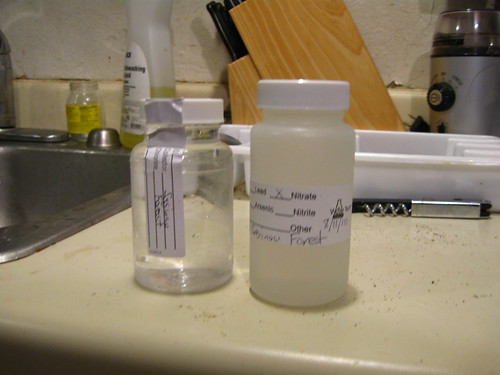
Today, it is the University of Michigan's Occupational Safety and Environmental Health (UM-OSEH) services coming to collect cabin water samples for nitrate and coliform contamination testing.

Water samples from the tap


Sometimes, the human industrial history of the region intrudes upon life more strongly than on other days.

Thursday, May 20, 2010

A walk in the woods

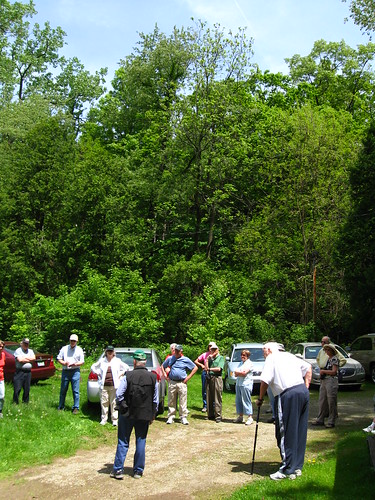
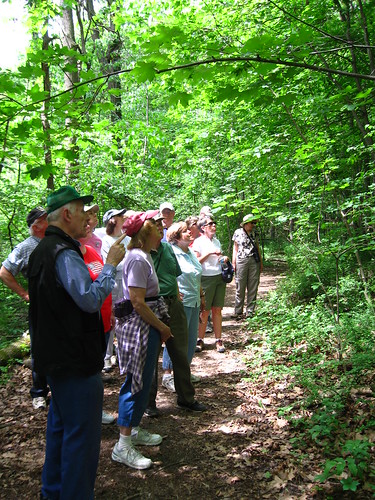
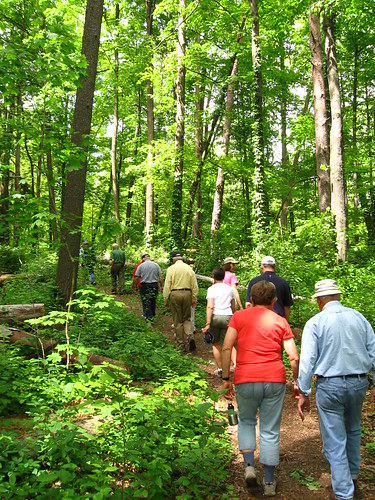
There was a small group walk today in Saginaw Forest. I was able to learn some things about the forest of which I was previously unaware:
  1. There was an historical offer to clear-cut some of the forest, which was declined.
  2. The scots pine planted north of the lake is uncommon because of its straightness (normally, they grow a little crooked).
  3. There are measuring tapes that allow one to quickly determine the diameter of a tree.
  4. At least one catalpa remains on the north side of the lake.
  5. A new species of tree was discovered in Saginaw Forest during the last century.
Other than that, it was a really nice day to have a small outing, and I was really quite surprised that the front lawn and turn-around area could handle so many cars. (However, I suppose that is the benefit of having well-organized drivers.)

IMG_1870
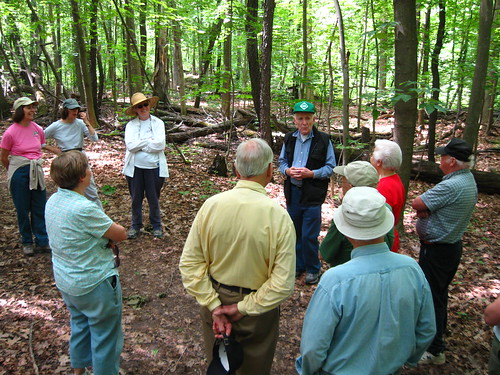
Gathering in front of the cabin: some introductory pre-"amble" comments.

IMG_1878
The arboretum: investigating some of the variety of tree species planted in the forest.

IMG_1882
Ambling: walking through the (originally planted) pine stands. These stands were planted waaay back in 1904. This particular section (between stands 2a and 2b) has suffered a lot of wind damage over the years (and is now having to suffer ivy).

IMG_1887
On the ground discussion: stopping to listed to a brief explanation of how forest stands can retain diversity, thanks to tree gaps. Also a discussion on how selective forestry can actually seriously degrade a forest, using the example of Beaver Island.

Monday, April 12, 2010

Third Sister Lake map

A number of decades ago, the state DNR did surveys of the inland lakes of Michigan. In amongst those lakes they surveyed was Third Sister Lake. A basic bathymetric map of the lake can be found here.

Tuesday, February 16, 2010

An initial description of Third Sister Lake from 1904

The first scientific description of Third Sister Lake occurred in 1904, written by Lewis H. Weld in the journal Botanical Gazette in a paper titled "Botanical Survey of the Huron River Valley. II. A Peat Bog and Morainal Lake" (true, it is a description within the context of a detailed description of First Sister Lake). The description extends out toward First and Second Sister Lakes, but the general descriptions are quite interesting, from the point of view of history - both of the area as well as a description of land cover.
West of the second, a quarter of a mile away, is the third lake, the largest and deepest of the group. It is not connected with the other two, a low, gravelly ridge separating it from the marsh just east of the woods, through which the other outlet flows. The outlet of this third lake flows through a bog at its western extremity, then to the southwest, where it makes a great bend through a level plain; then, after two or three miles, it turns north again, joining the outlet of the other two and forming a branch of Honey Creek which empties into the Huron River about a mile above Foster's.

The levels of these lakes are approximately the same, ie, 914ft (278m) above sea level or 33ft (10m) above the bench-mark on the library building of the State University, and 120ft (36.5m) above the Huron River at the outlet of Honey Creek. The summit of the divide east of the first lake is 955t (29Im) above the sea, or 41ft (12.5m) above the lakes. The corner on Liberty Street, one mile South of Huron is 979ft (298m) and the kame just south of Liberty Street rises probably 75ft (23m) higher. It was once proposed to derive the water-supply of Ann Arbor from the third lake, pumping the water to a reservoir on top of this kame, about 140ft (42m) above the lake.

Ordinarily the level of the three lakes remains nearly constant throughout the year, becoming, however, 6 to 8in (15-20cm) higher in the spring. In the fall of 1901 the lakes were said to be lower than they had been in years. It is popularly supposed that they are fed by springs, but careful testing with a thermometer, in the fall of the year, has thus far failed to detect the influence of such springs. It is a very common thing, however, for lakes of this sort to be sub-irrigated, that is, water percolating through the stoney clay of adjacent hills makes its way to the lake, and, owing to the higher water-table on all sides, maintains the level constant in the lake basin. Another thing which helps to retain the water is the fact that the bottom of the lake basin is filled with a deposit of blue clay which prevents leaching. The depth of the lakes varies with the size, the first being 18ft (5.5m) deep, the second over 35ft (10.5m), and the third 55ft (16.75m).

This group of lakes is of glacial origin, like numerous other small lakes of Michigan. They lie on the western slope of the terminal moraine which was formed by the Erie lobe of the icesheet, and which now extends northeast and southwest across the county. Just south of the second and third lakes is a high kame, and these lakes lie in some of those local depressions in the drift which are characteristic of a kame area. The present outlets follow the glacial drainage channels. These flowed away from the ice front to the north and northwest to the Huron River, which at that time had just formed in the re-entrant angle between the Erie and Saginaw lobes and flowed to the west through the Portage and Grand into Lake Michigan. All the region east of this terminal moraine, including Ann Arbor, was then occupied by the ice sheet, and the glacial drainage was to the west.

...

The Three Sisters were then originally two lakes, the third, which has always been separate, and one from which the first and second and the marsh north of the road have been derived. The original lakes were some 5 to 6ft (1.55-1.8m) higher than at present, as is shown by a beach or terrace north of the second lake, and by other evidence. Their lowering is apparently due in great part to better drainage since open ditches have been cut in the outlet channels.

[In summary] The third lake never was connected with the others. The first and second were once one, with an island in the center. Subsequent lowering of water and filling of channels has made two lakes.

Tuesday, January 26, 2010

Surveying the property

Old fence along boundary line
Today I talked with the surveyor on the property. I found him out on the SE corner of Third Sister Lake, surveying the PALL/Saginaw Forest property line. It was an interesting thing to learn about a little bit of the property, and surmise upon the history of certain artifacts in the area. For example, I thought that the location we were standing on was actually inside Saginaw Forest; it was, after all, covered by trees. However, looking around, he pointed out the old fence that was trampled. Using that as the reference point, it became more simple to see where the Saginaw Forest property stops: it's where the tree-type changes from tall pines to not-tall not-pines.

He had placed the prism pole in a steel pole sticking just out of the ground, possibly something that was used in an earlier survey of the lands. He told me there was a similar post in the pavement on Wagner Road, marking the center point of the larger section of land (Saginaw Forest is 80 acres, and is therefore two quarter-quarter sections or an eighth-section) that happens to include First and Second Sister lakes.

Similarly, we talked about the path of Liberty Road in this part of Washtenaw County: where it changes from a city road to a county road. Why does it - before becoming an east-west road - cut through the SE corner of Saginaw forest? He surmised that it was a compromise in planning to connect an east-west road to a non-cardinal road. Looking at a map of the region, it becomes easier to see how the original parcels in the region likely lay, with Liberty Road cutting through the four parcels between Saginaw Forest and I-94 (it takes a little bit of squinting to see where those four parcels used to be).

Thursday, December 31, 2009

A gift to Saginaw Forest preservation

There is a story from The University of Michigan's Philanthropy Network about a gift to preserve Saginaw Forest:

More than 100 years ago, lumberman and Michigan Regent Arthur Hill and his wife, Louise, made a gift of dirt, trees and water to the U-M in the form of a rural, 80-acre tract five miles west of the Ann Arbor campus. Named Saginaw Forest after the Hills’ hometown, it has long served as a living classroom and research resource for the School of Natural Resources and Environment (SNRE).

The M. Jerome Rieger Saginaw Forest Enrichment Fund, created through a $250,000 gift from Bedford, New York’s Richard O. Rieger (AB ’79) to honor his father (AB ’40, MBA ’41), will bolster the impact of the Hills’ early philanthropy by helping implement a new SNRE stewardship plan for the Forest. Supported by Ann Arbor’s Debby McMullen, the study examines the Forest’s continued use for graduate education and research as well as new possibilities for K-12 environmental education programs and nature-based recreation for the public. Saginaw Forest features 55 acres of woodlands planted between 1904 and 1937, Third Sister Lake and surrounding wetlands.

Richard Rieger said his gift reflects his father’s passion for the woods. An ardent student of trees, the elder Rieger possessed an uncanny ability to identify an enormous range of species, even in Latin.

“He’d walk down the street and tell you the names of every tree,” his son said. “Even though he was told (forestry) was not a good professional pursuit, he pursued it in his leisure. It was a lifelong love.

“He had so many interests, and the University of Michigan really nurtured them. His Michigan experience really opened his eyes.”